Ironbark 28' Traditional Displacement Boat
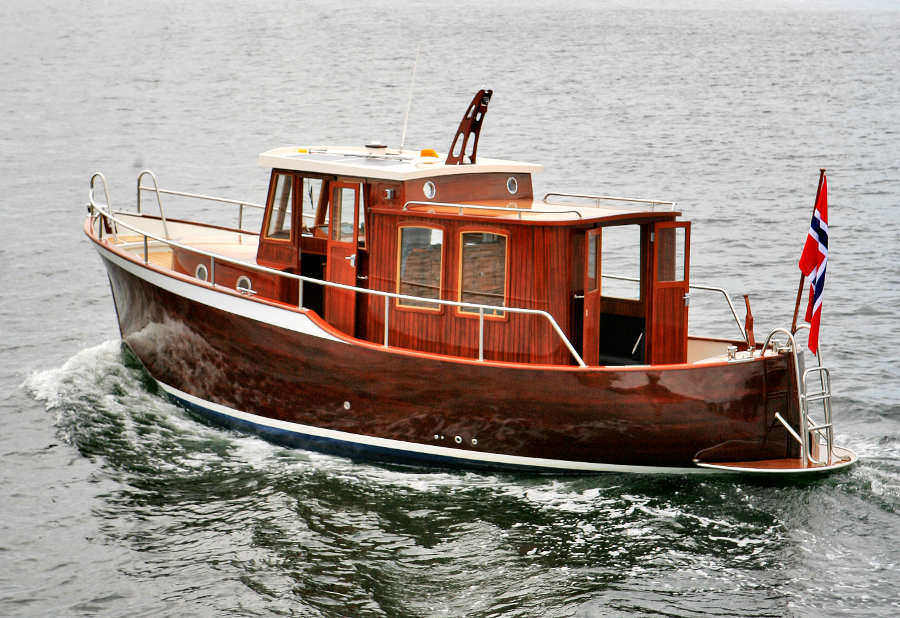
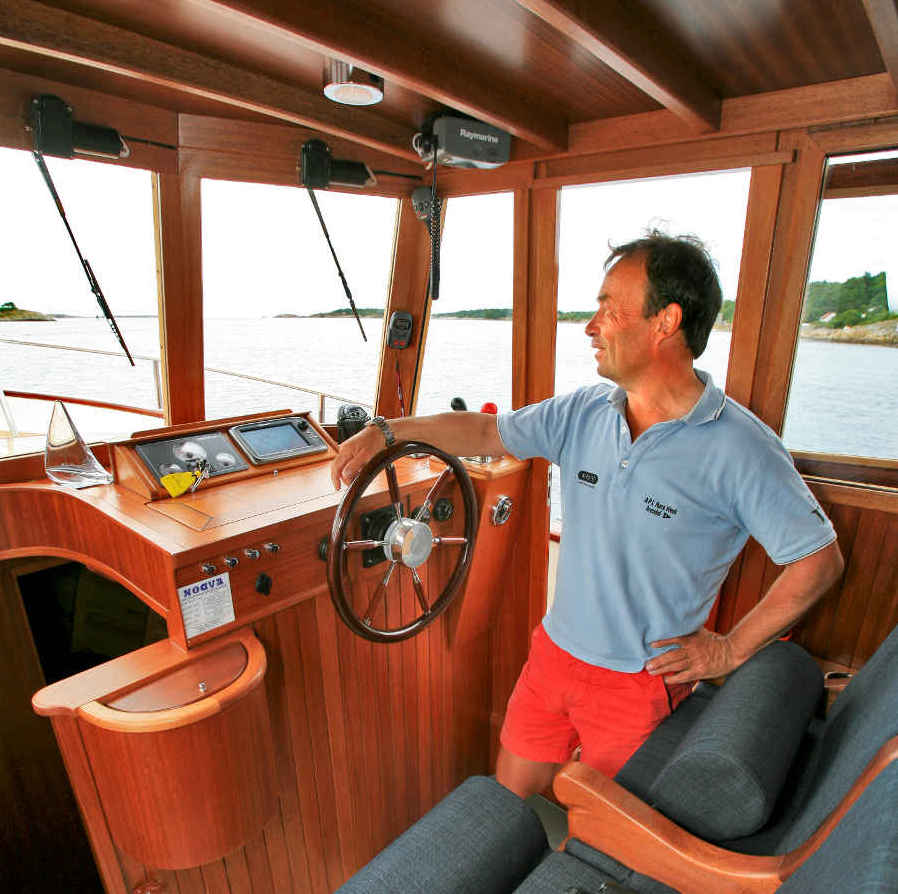
 Ironbark 28' Traditional Displacement Boat. Photo credit, batmagasinet.no
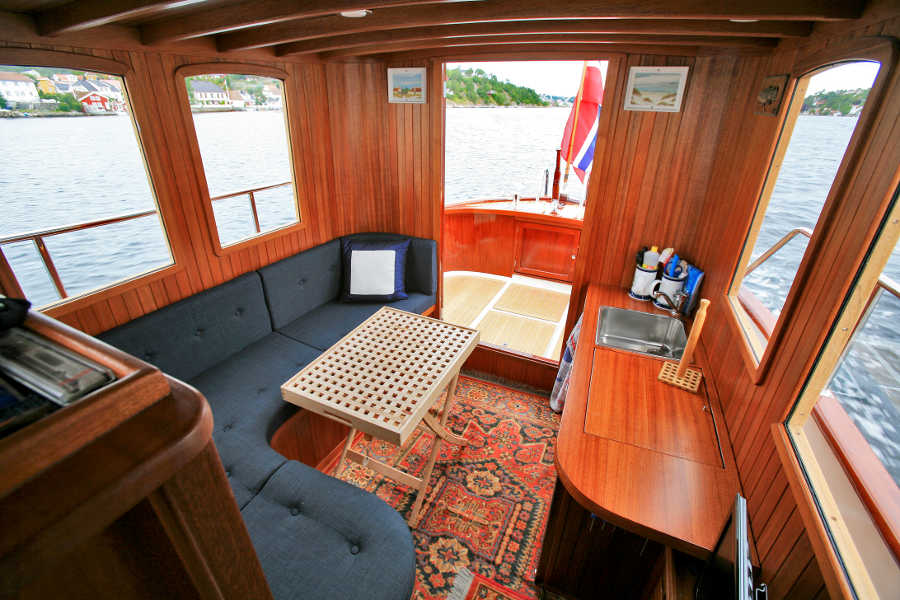
 - Ironbark 28' Traditional Displacement Boat. Photo credit, batmagasinet.no
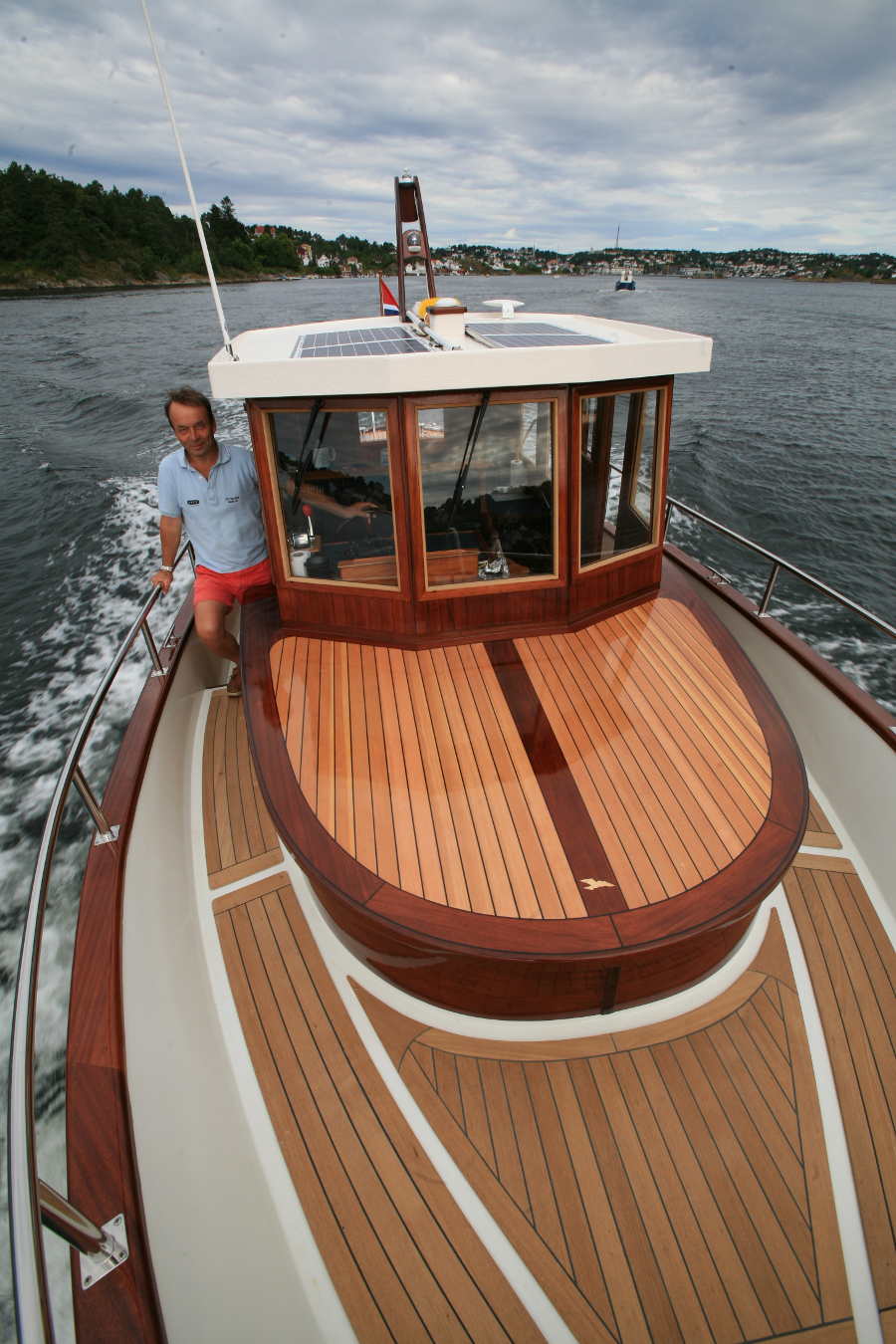
- Ironbark 28' Traditional Displacement Boat. Photo credit, batmagasinet.no
- Ironbark 28' Traditional Displacement Boat. Photo credit, batmagasinet.no
- Ironbark 28' Traditional Displacement Boat
- Ironbark 28' Traditional Displacement Boat
- Ironbark 28' Traditional Displacement Boat
- Ironbark 28' Traditional Displacement Boat
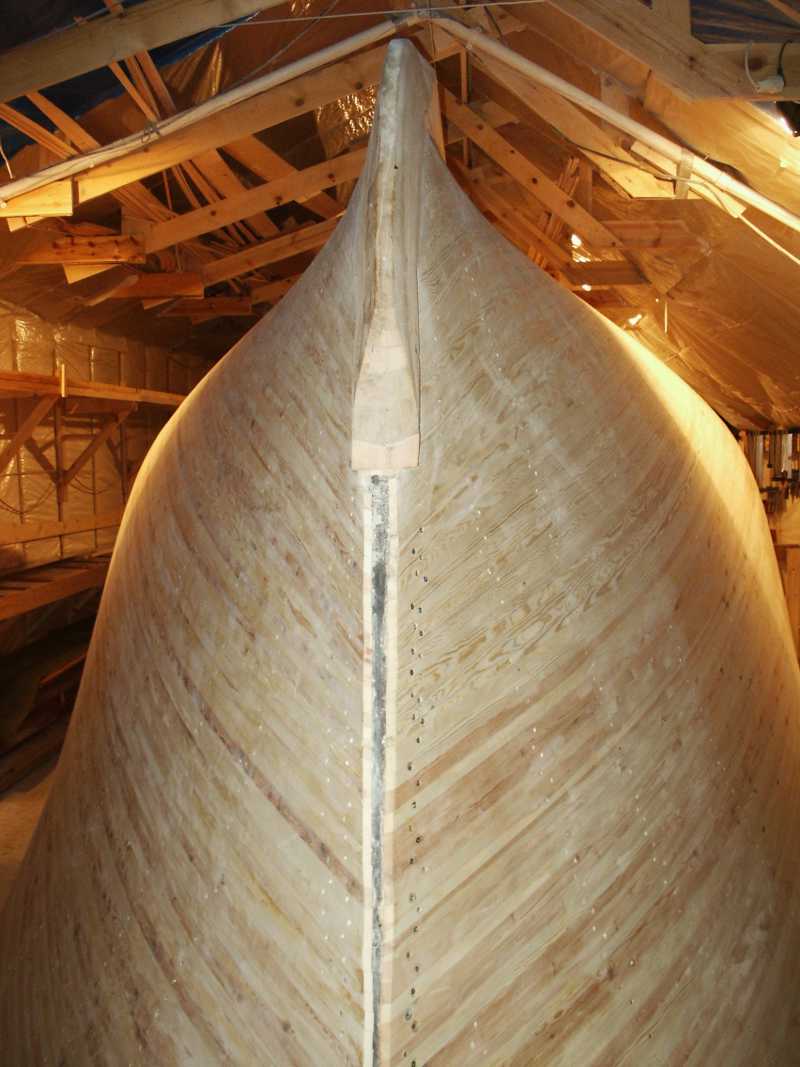
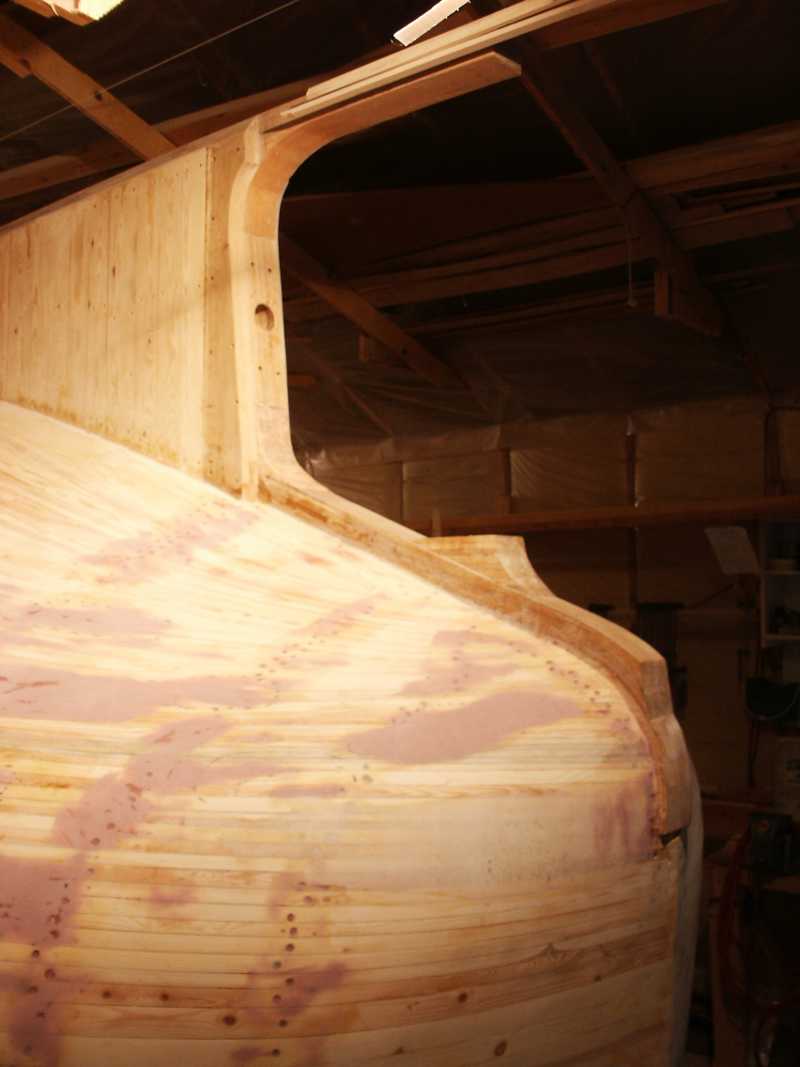
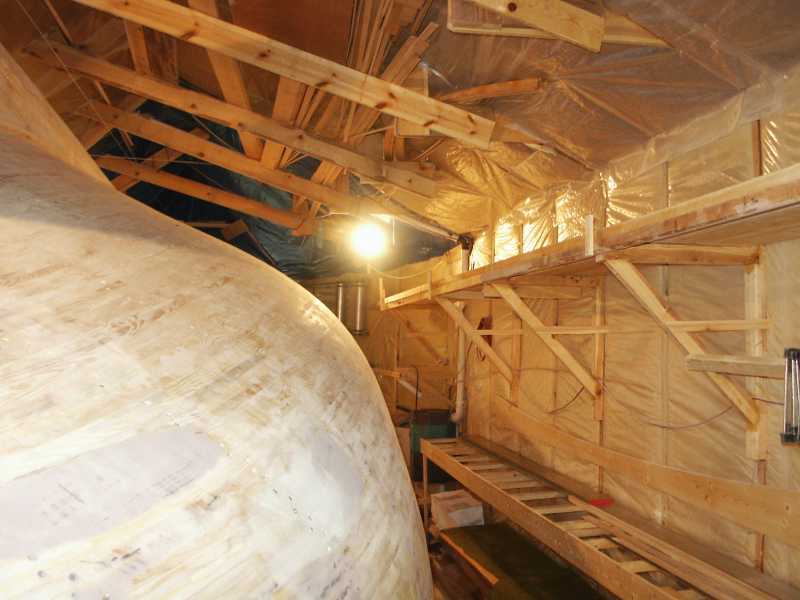
- Ironbark 28' Traditional Displacement Boat. Ironbark is under construction in Southern Norway.
- Ironbark 28' Traditional Displacement Boat. Ironbark is under construction in Southern Norway.
- Ironbark 28' Traditional Displacement Boat. Ironbark is under construction in Southern Norway.
Similar Designs
About the Plans
Construction Method and Materials:
Traditional or cold molded constructionNumber and Type of Drawings:
Full size plots (e-mail or CD) for bulkheads, stem and transom, plus pdf building plans.
About the Builders
Eikeli Wooden Boatbuilders utilizes both wood and fiberglass in its production, and has good knowledge and experience of combining methods. Our boats are known for high quality and good comfort. Yard at Birketveit was established by Samuel Jorgensen 80 years ago. For more information, contact:
Bjørn Jørgensen
tel: 37 04 70 83
mobile: 90 91 74 48
email: odb-joe@online.noweb site:
www.eikelitrebaat.noaddress:
Gml. Birketveitvei 16
4870 Fevik
Grimstad
Norway
Designer's Comments
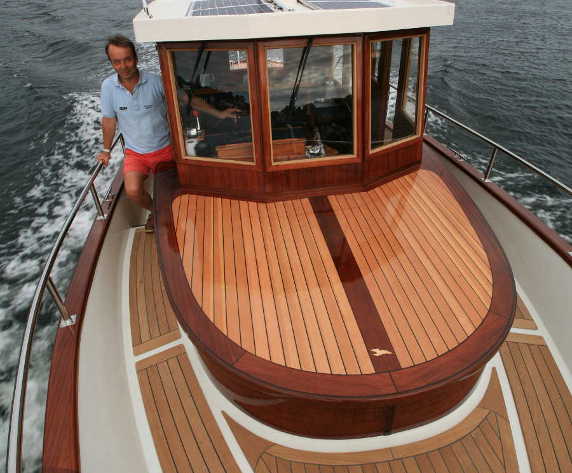
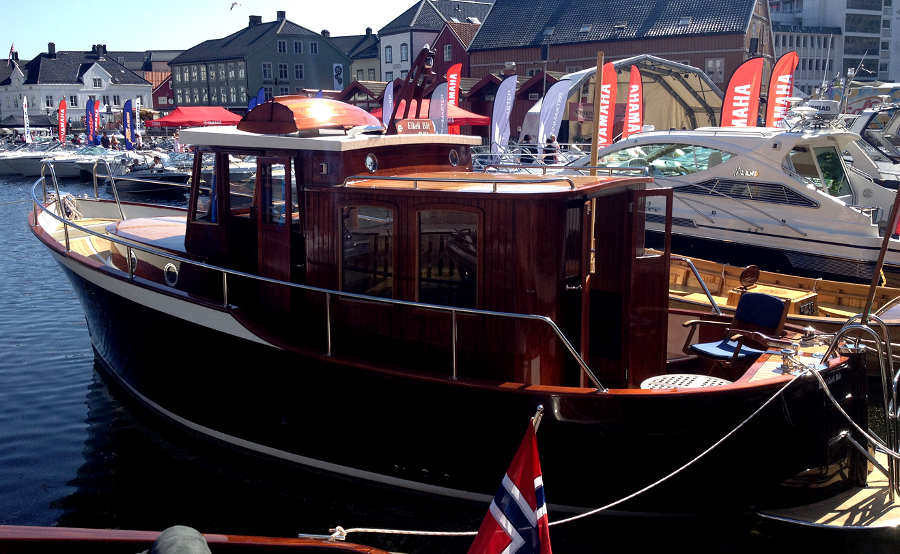
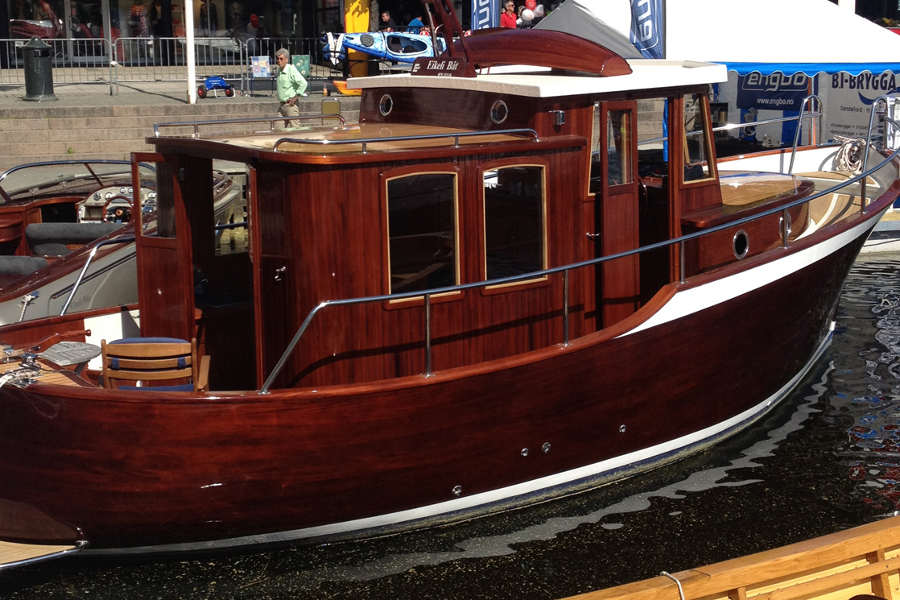
Ironbark is one of ten power boat designs created for the article “Power Boat Design, Form and Function” published in Wooden Boat #137 and in Motorboats, Special Issue, Summer 2012. Above, Ironbark 28 underway. Photo credit, batmagasinet.no.
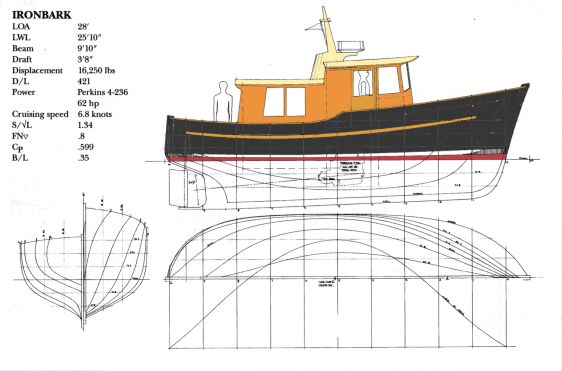
Though actually not a very large boat, Ironbark will have the feel of a real ship. Her slow deep roll, straight tracking, and ability to keep on going no matter what, are the benefits reaped from plenty of weight, a long straight keel, and fine, deep sections. She is very much a traditional type; her lineage started before 600 AD with Norse Viking ships, comes through Scandinavian and Irish fishing vessels, and finally through the fishing boats of my home waters, Canada's westcoast.
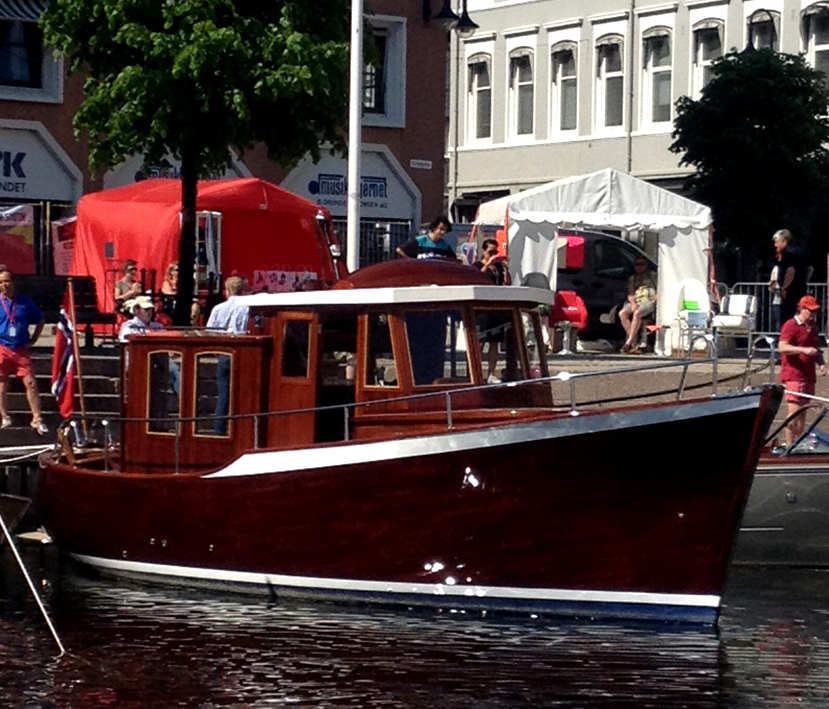
Ironbark's looks are also entirely in keeping with her performance, no tricks here! The deckhouse and accommodation is very limited for her weight and cost, but a large deckhouse can visually overpower a graceful hull; get the proportions wrong and the boat starts to look top heavy.
Ironbark carries 2600 lbs of ballast in the form of lead pigs down on top of the keel between the floors. Ballast? in a powerboat, how come? Because it lowers VCG (vertical center of gravity) and lengthens GM. GM is the distance from the CG (center of gravity) to the metacenter. The metacenter's height is dependent on waterplane inertia, a narrow, fine waterplane gives a low metacentric height and a rolly boat. A wide, full waterline gives a tall metacentric height and a stiff boat. As the boat heels the VCB (vertical center of buoyancy) moves about the metacenter, and righting arm is the distance between a vertical line connecting VCB and metacenter, and CG (center of gravity). The longer the GM, the faster a large righting arm is developed, and the faster the boat returns to upright. There is no real agreement on how much GM is enough, Francis S. Kinney in Skene's Elements Of Yacht Design, mentions a GM of 2'-2'6" for small power cruisers. Ironbark is right in the middle of that with a GM of 2.25'. The CG two inches above DWL allows for additions of weight up high, a heavier mast and stabilizer poles, or a dinghy on the cabintop.
The first Ironbark has been launched in Norway and looks absolutely fabulous. Her hull was built by Arild Gundersen of Eydehavn to a very high standard. She was then completed (deck, superstructure, interior) by Eikeli Boatbuilders (www.eikelitrebaat.no) in Fevik, Grimstad city. These pictures were taken at a boat festival in Arendal City, and she will be on exhibit at the Risor Wooden Boat Festival later this summer (www.trebatfestivalen.no).